

A RAV4 that spins the tachometer past 3,000 rpm while the speedometer holds at 80 km/h is not automatically a dead gearbox. The car in this ticket had covered just over 60,000 km, and the whole repair came down to a fluid change.
For a parts buyer the useful signal is what the workshop did not sell. No teardown, no replacement steel belt, no valve body. The first shop quoted a CVT overhaul; the second opinion fixed it with twelve litres of transmission fluid run through an exchange machine in under an hour. The inspection points below are kept as they were recorded, because they are exactly what separates a cheap fluid service from a five-figure rebuild on this transmission.
Case 1 — Toyota RAV4 CVT, engine revving with no road speed
Symptom. On a freeway on-ramp the driver floored the accelerator to merge, and the engine climbed past 3,000 rpm while road speed held near 80 km/h and began to sag. The engine howled while the car refused to accelerate, as if something were holding it back. Switching off and restarting changed nothing. Through the whole episode there was no metallic grinding and no oil leak.
Diagnosis. The first workshop blamed a slipping CVT steel belt and quoted a teardown. A Toyota specialist instead asked one question: had the CVT fluid ever been changed? It had not. The owner had been told at purchase that the transmission was maintenance-free for life, and in six years and 60,000 km had never once pulled the transmission dipstick. A CVT transfers drive through hydraulic friction between the steel belt and the pulleys, and the same fluid handles lubrication, cooling and cleaning. Once the fluid ages and thins, it can no longer build the film that clamps the belt against the pulleys, so the belt slips and the engine spins without moving the wheels.
Fix. The specialist ran twelve litres of genuine CVT fluid through the transmission on an exchange machine. The job took under an hour and cost a few hundred yuan, and nothing inside the gearbox was replaced. On the road test the tachometer and speedometer climbed together again, and the earlier bogging and howling were gone.
Parts notes. The repair itself was a fluid exchange, so the buy list on this ticket is the fluid plus the service parts that sit around the pan for the fuller service a neglected CVT often ends up needing:
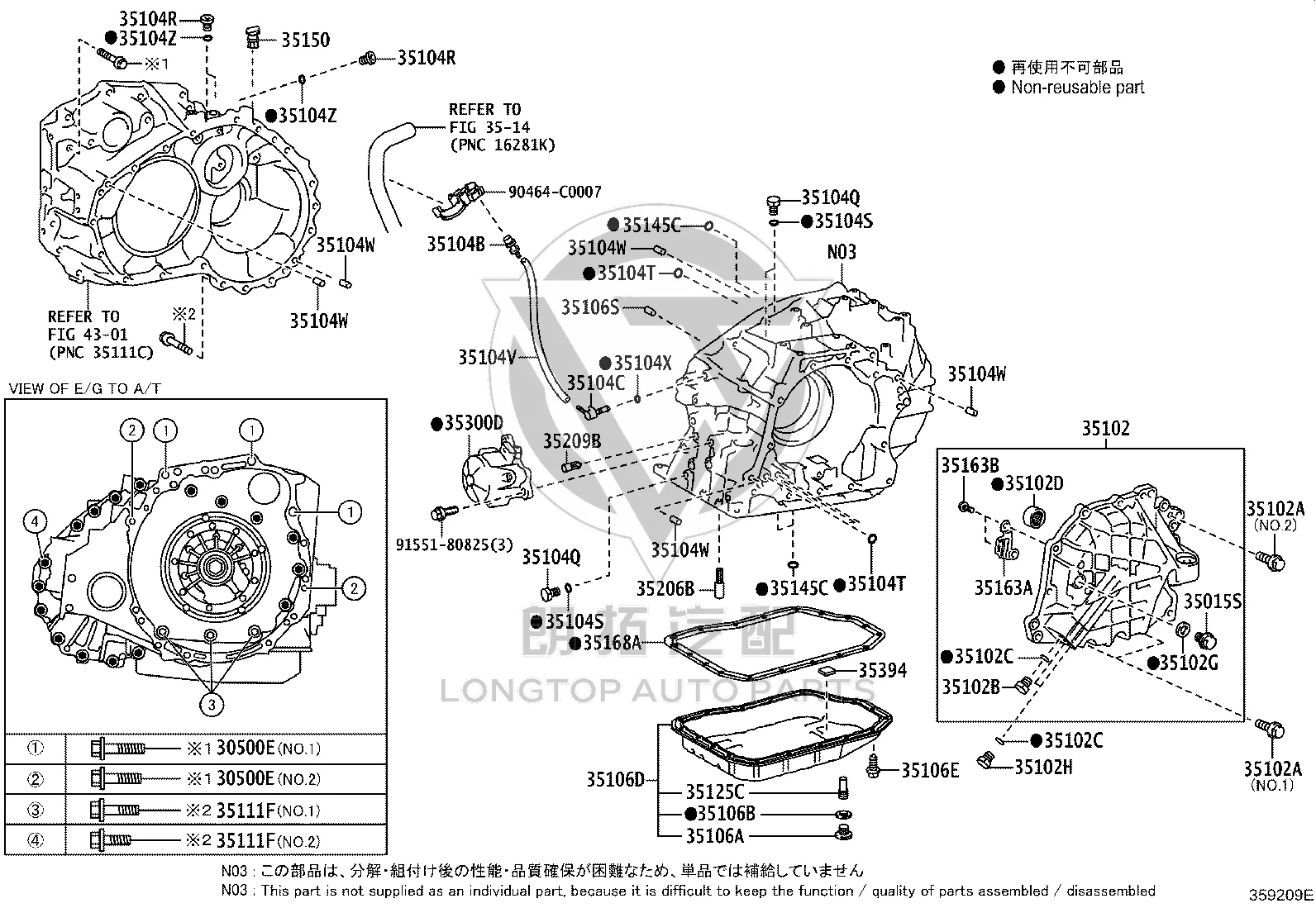
- Transmission oil pan 35106-48011, listed for the Toyota RAV4 XA40 generation (ALA4#/ASA4#/AVA4#/ZSA4# chassis), which includes the 2.0 L CVT build this ticket describes
- Transmission oil pan gasket 35168-28020 and transmission filter 35330-28020 for the pan-drop service
- the fluid itself sits in our automotive fluids range
The reason a CVT punishes neglect faster than a conventional automatic is the way it transmits drive. A torque-converter automatic will usually warn first with a harsh shift or a shudder before anything breaks, but a CVT, once its fluid can no longer clamp the belt, drops straight into slip and lost drive. That is why the specialist treats the fluid as the first suspect rather than the last, and why the cost of ignoring it runs so much higher than the cost of a fluid change.
The diagnostic rule the specialist left behind is worth repeating. If a CVT car only surges rpm while road speed lags, especially when cold, and there is no metallic grinding and no leak, the cause is aged fluid in roughly nine cases out of ten. Judder, shock and clunking are the signals that point at a genuinely worn belt or pulley. The same logic applies to the service interval: the manual calls for a fluid change around 40,000 to 60,000 km, and a car that mostly does short city trips argues for the earlier end, nearer 30,000 km. The “lifetime” claim is a sales phrase, not a service schedule.
What this case teaches parts buyers
- Rpm surge without road speed is a fluid symptom first. Before quoting a belt, confirm the fluid’s age and condition; on a CVT this is the cheapest and most common cause.
- A CVT depends on its fluid for clamping force. The belt is held against the pulleys by hydraulic friction, so thin, dirty fluid is a mechanical failure waiting to happen.
- No teardown means a short buy list. When the gearbox itself is sound, the order stays at fluid and the pan service parts, not a valve body or a belt.
- Match the chassis, not just the model. The pan above covers the XA40 RAV4, so confirm the chassis code before ordering and run the OE number check first.
- Genuine fluid is the prevention. The shop’s closing point is the maintenance interval, and identifying genuine Toyota parts matters most for the consumables a CVT lives on. See also the genuine parts guide.
If you need RAV4 transmission parts or the wider CVT service range for your market, send the OE numbers or chassis codes on WhatsApp or through our contact page. LongTopAuto matches genuine Toyota and Lexus parts by OE number, with fitment confirmed against chassis code and production year.

The LongTopAuto team writes from 25+ years of genuine Toyota and Lexus OEM parts export experience in Guangzhou, China. Our guides come from daily OE number checks, packaging review, and export sourcing work.