

A Mark X that drinks oil is rarely a worn-out engine, and the 280,000 km example below is the proof. The block came out with the factory cross-hatch still on the cylinder walls and the crank journals still clean, yet the third oil control ring on the piston was packed solid with carbon. The fault sat in the ring design, not in the metal.
For a parts buyer the useful signal in this ticket is what the shop replaced and what it deliberately did not. The invoice was piston rings and valve stem seals, not pistons, not bearing shells, and not a re-bore. The inspection points below are kept as the workshop recorded them, because they are exactly what decides whether an oil-burning quote stays short or balloons into a full rebuild.
Case 1 — Mark X (GRX12#) burning oil, third oil ring clogged at 280,000 km
Symptom. A first-generation Toyota Mark X (GRX12# platform, the 2.5 L or 3.0 L build) came in consuming engine oil, the owner’s complaint being a car that was supposed to be handed down through the family and instead started burning oil. The odometer stood at 280,000 km.
Diagnosis. On teardown the third oil control ring on the piston was clogged solid with carbon; a solvent soak would not shift it. The original one-piece oil ring is the weak point here. It was a factory design choice aimed at simplicity and durability, but its drainage path is narrow, so carbon blocks it easily, and the failure becomes all but certain once deposits begin to settle. The pattern is worst on cars driven short distances, where the engine never reaches full temperature before shutdown and fuel residue and oil vapour collect in the ring grooves. What made this engine worth opening at all is how clean the rest of it was: at 280,000 km the cylinder walls still carried the factory cross-hatch, and a bore gauge showed negligible wear. The crankshaft came out clean, with the bearing shells mirror-smooth and no scoring, which matches a car that had its oil changed on schedule.
Fix. The engine was fitted with a replacement piston ring set that uses a split oil ring instead of the one-piece original. The split design tolerates carbon far better, so a partial build-up no longer seizes the ring’s scraping action, and it is now the standard fix for this engine’s oil-burning complaint. Because the bores measured nearly unworn, there was no re-bore and no sleeve work, only a light clean-up of the ring ridge at the top of each bore with fine paper. The valve stem seals and the other aged rubber parts, hardened after 280,000 km, were replaced at the same time.
Parts notes. The two parts that carry this repair are the ring set and the valve stem seals, and both must be matched to the chassis code rather than the model name. In our catalog:
- Piston ring 13011-31110, listed for the Mark X (GRX12#) built from 2004 through 2009, the Crown (GRS18#/GRS182), and the Lexus IS250/300 (GSE2#)
- Valve stem seal 90913-02101, listed for the Mark X (GRX12#/GRX13#) and the Reiz (GRX12#), the China-built Crown (GRS18#/GRS20#) and a wide spread of Toyota and Lexus GR-family cars
- see the full piston ring and engine block seal ranges
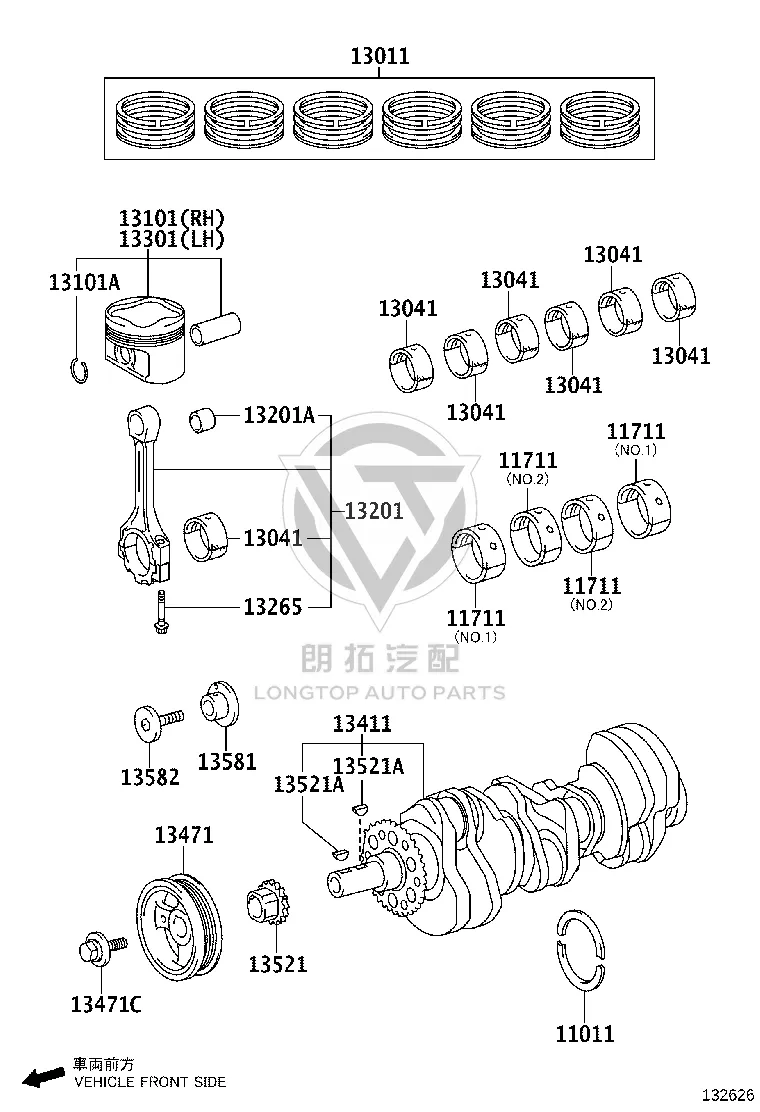
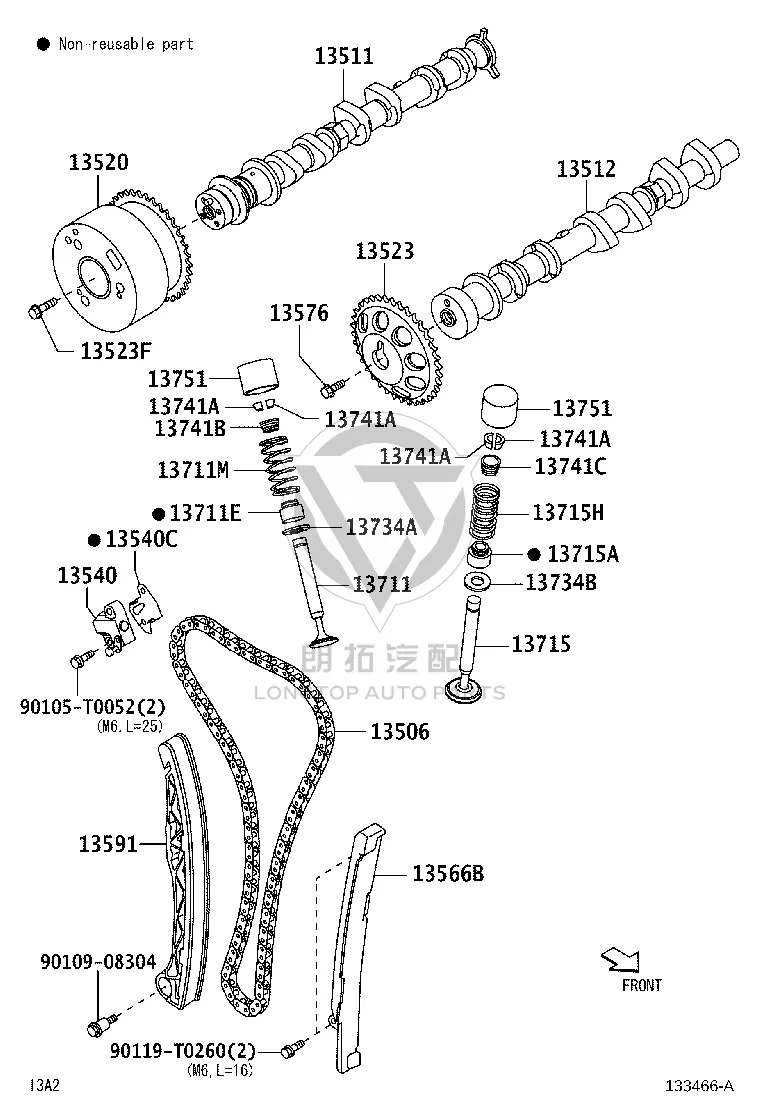
The fitment window is the part worth pausing on. The source ticket is a first-generation Mark X, which is the GRX12# chassis, and the ring above covers that build. The later Mark X (GRX13#, from 2009 onward) takes a different ring set, so a buyer should quote against the chassis code rather than the model name alone. The same discipline applies to the valve stem seals, which are shared across a wide family but still carry specific build windows. What keeps this repair from repeating is the routine the shop spelled out for the owner: regular oil changes, genuine filters, and avoiding a steady diet of short trips that never bring the engine to full temperature.
What this case teaches parts buyers
- Burning oil does not mean a worn block. The cross-hatch was intact and the journals were clean at 280,000 km; the fault was a carbon-clogged oil ring, not a tired engine.
- The oil control ring, not the compression ring, is the usual culprit. The third ring takes the carbon first on this engine, so an oil-burning quote should point at the full ring set.
- The split ring is the permanent fix. A three-piece oil ring keeps scraping even with partial carbon, where the original one-piece ring seizes.
- No re-bore means a short parts list. When the bores measure clean, the order stays at rings and seals, and that is the difference between a routine overhaul and a full rebuild.
- Match the chassis code before you order. GRX12# and GRX13# take different rings, and the OE number check is what keeps the order landing on the right generation. See also how to identify genuine Toyota parts before accepting a substitute ring set.
- Maintenance decides whether it comes back. The shop’s closing advice is the real prevention: changed oil, genuine filters, and fewer short trips are what stop a replacement ring from clogging again a few years on.
If you need these engine parts or the wider GR-family range for your market, send the OE numbers or chassis codes on WhatsApp or through our contact page. LongTopAuto matches genuine Toyota and Lexus parts by OE number, with fitment confirmed against chassis code and production year.

The LongTopAuto team writes from 25+ years of genuine Toyota and Lexus OEM parts export experience in Guangzhou, China. Our guides come from daily OE number checks, packaging review, and export sourcing work.