

Toyota Hybrid Battery Aging: NiMH Cell Drift, BMS Protection, and Replacement Cost
A ten-year-old Toyota hybrid that flashes a full dashboard warning the moment it is started, then locks itself into a reduced-power protection mode, very often has a perfectly healthy engine under the hood. The fault sits in the high-voltage traction battery. Toyota hybrids from the Corolla Hybrid and Levin Hybrid through the Camry Hybrid, and the Prius before them, carry nickel-metal hydride (NiMH) packs, and those packs have a service life that clusters around ten years.
When that threshold is reached, individual cells begin to drift in voltage and capacity. The battery management system (BMS) reads the imbalance and commands protection mode before the car can strand its owner on the road. Toyota has stayed with NiMH since the Prius era precisely because the chemistry is stable and inexpensive, but stability does not make it immortal. The warning on a decade-old hybrid is not an engine problem. It is a battery reaching the end of a long but finite life.
Case 1: a Camry Hybrid that alarms at startup
Symptom
A Camry Hybrid parked overnight produced a short warning tone, then lit the instrument cluster red the moment the owner pressed start. The car entered protection mode immediately. The engine itself was fine and idled normally, which ruled out the obvious mechanical suspects early.
Diagnosis
A technician connected a diagnostic tool and read the hybrid system. The engine control side showed nothing abnormal, so the diagnosis moved to the high-voltage battery. On a ten-year-old pack the cells had drifted enough in voltage and capacity that the BMS flagged the pack as unstable and forced protection mode. This is deliberate behavior on Toyota’s part. The system locks the car down before a degrading pack can cause a failure in traffic.
Fix
The fix is replacement of the traction battery, not any work on the engine or the wiring. The technician laid out the standard options, which sit in three cost tiers detailed in the parts notes below. No engine disassembly is involved in this repair.
Parts notes (battery cooling)
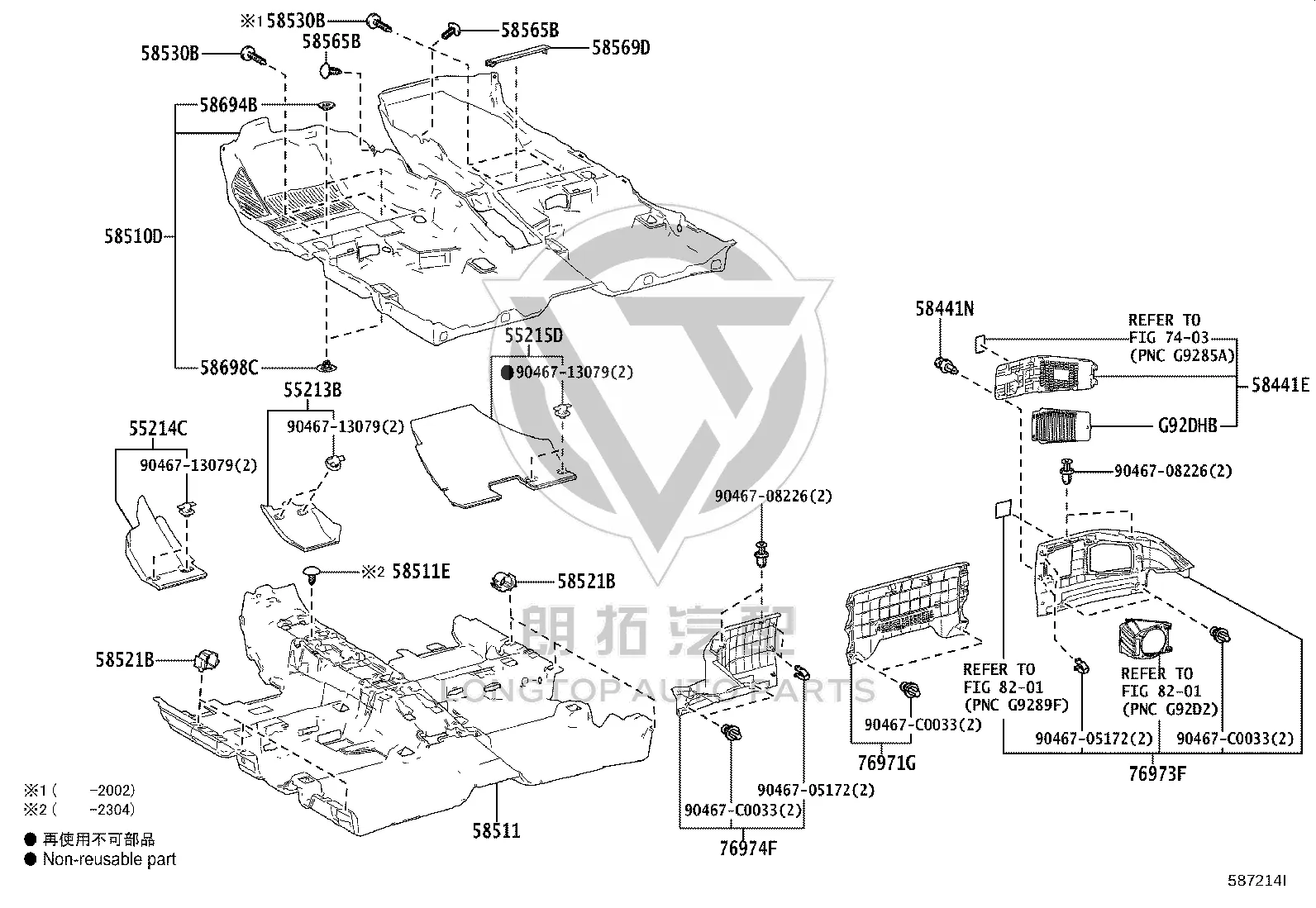
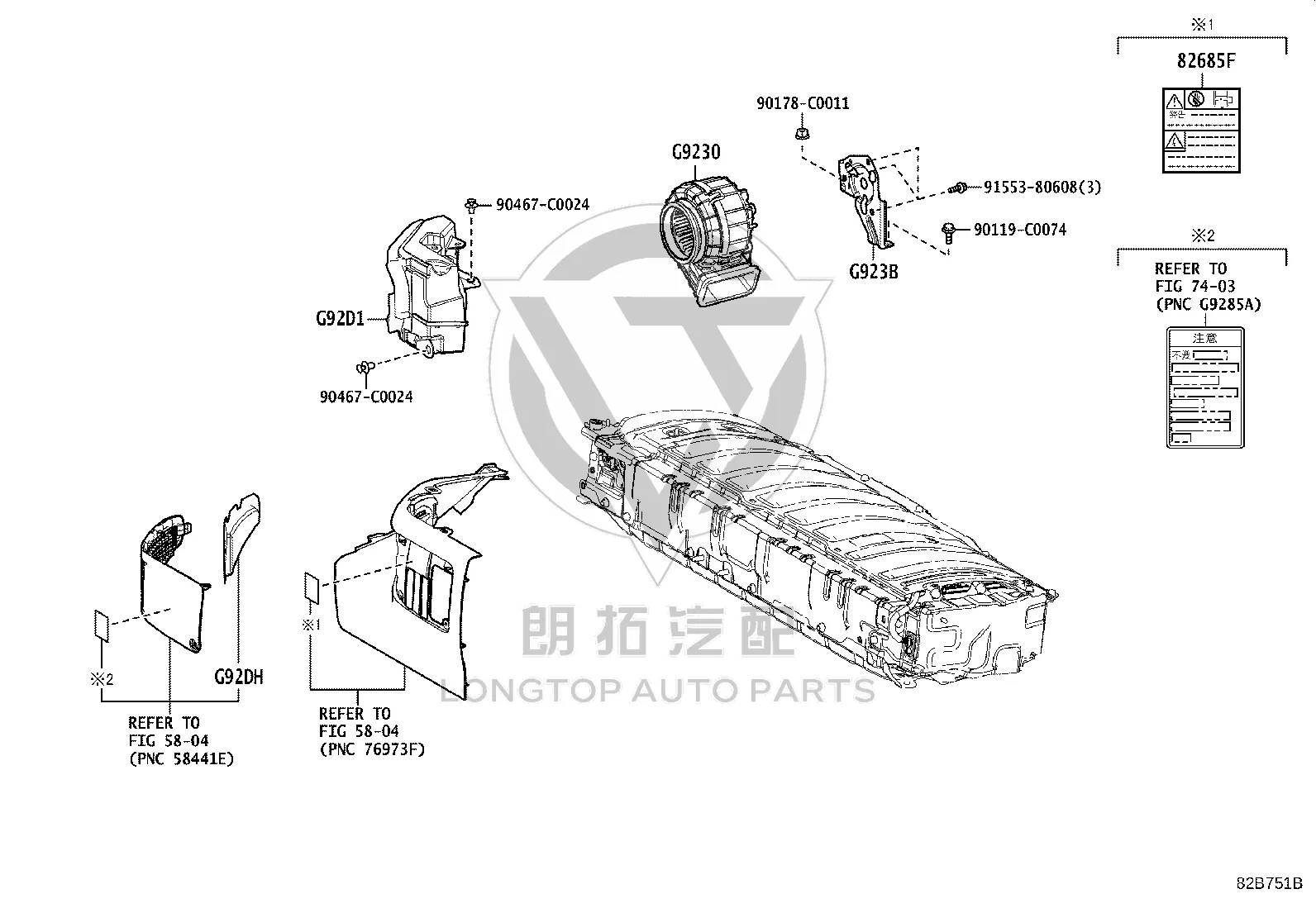
A hybrid pack’s ten-year life is set in large part by how cool it runs. A clogged intake filter or a failing radiator makes the pack run hot and accelerates cell drift. For the Corolla Hybrid and Levin Hybrid (ZWE21#), the battery cooling intake filter is G92DH02030. For the Camry Hybrid and ES300h it is G92DH33050. The shared battery radiator is G923033050. Keeping these clean is the cheapest thing an owner can do to stretch a pack’s life before a full replacement becomes necessary.
Case 2: a 110,000 km owner who paid for a full pack
Symptom
An owner with roughly 110,000 km on the clock lost the battery first, ahead of any mechanical wear. The pattern matched the Camry case: warning lights, then a car that would not leave protection mode.
Diagnosis
A paid inspection at 600 yuan (about US$85) confirmed what the warning had already hinted. The pack had reached the end of its usable life.
Fix
The owner replaced the complete battery pack at 21,000 yuan (about US$2,900). Their own summary after the repair was blunt: the hybrid was bought to save money, but once the battery bill landed, the running total came out worse than a comparable petrol car.
Parts notes (replacement cost tiers)
A full original-equipment pack runs from 18,000 to 23,000 yuan (about US$2,500 to $3,200). A third-party lithium conversion costs 5,000 to 8,000 yuan (about US$700 to $1,100). The cheapest route, replacing individual cells at 300 to 800 yuan each, is the one to avoid, for the reason explained in the next case.
Case 3: a Levin Hybrid family car near the ten-year mark
Symptom
A Levin Hybrid that had carried a family for nearly a decade threw the same startup warning.
Diagnosis
The diagnosis matched the other two cars. After close to ten years the pack’s cells had drifted beyond what the BMS would tolerate.
Fix
The owner faced the same three-way decision, and the mechanic’s warning about the single-cell shortcut is the detail worth repeating. Mixing new cells into an aged pack does not work. The new and old cells have different internal resistance and different capacity, so the BMS flags the pack again. A single-cell repair tends to fail again in eight to nine months, which means paying twice.
Parts notes
Buyers supplying a hybrid battery service should price the job as a pack, not as loose cells. The cooling components listed above are the routine items that go with any pack service, and this site’s battery heat sink and filters and strainers categories cover the related hardware.
Part of the reason owners feel blindsided is that no regulation sets a mandatory warranty term for a hybrid battery, and a consumer-association proposal asking automakers to state a battery’s expected life in writing has not become standard practice. Toyota’s own documentation does not spell out the ten-year figure, so owners discover the cost only when the warning light appears. For a buyer stocking hybrid-system parts, this is useful context: the demand for traction batteries and their cooling components is steady and predictable, and it concentrates on vehicles crossing that ten-year line.
What these cases teach parts buyers
- The NiMH traction battery is a consumable with a roughly ten-year life, not a lifetime component.
- A hybrid that alarms at startup and enters protection mode with a healthy engine is a battery diagnosis, not an engine diagnosis.
- Single-cell replacement is a false economy because internal-resistance and capacity mismatch will trip the BMS again.
- Cooling maintenance is the cheapest way to protect a pack. Clean the battery intake filters and radiator before the pack degrades.
- Always confirm the chassis code before quoting a battery or cooling part, then check the OE number with the OE number guide, and verify a part is genuine with the genuine parts guide.
Need a genuine battery cooling filter, radiator, or related hybrid-system part for a Toyota or Lexus? Reach us on WhatsApp or through the contact page with the OE number and chassis code, and we will confirm fitment before you order.

The LongTopAuto team writes from 25+ years of genuine Toyota and Lexus OEM parts export experience in Guangzhou, China. Our guides come from daily OE number checks, packaging review, and export sourcing work.