
Toyota Sienna Hybrid Battery Failure After Water: Leakage, BMS Protection, and Warranty Limits
A three-year-old Toyota Sienna hybrid with roughly 80,000 km on the clock does not lose its battery to age. A pack this young is nowhere near the end of a nickel-metal hydride battery’s normal service life, so when one fails this early the cause is usually external. The case below traces it to water. The owner drove through a deep flood puddle, and not long after, the car was running with reduced power, higher fuel consumption and a cluster of warning lights.
The Sienna’s hybrid system relies on a nickel-metal hydride (NiMH) pack built from around forty small cells wired in series. Water that gets inside the pack creates leakage paths between those cells, and once the battery management system (BMS) detects the imbalance it steps the car down into a protective mode. The repair bill that follows is one of the largest a hybrid owner can face, and it sits outside the standard warranty. Water damage is a warranty exclusion, not a covered defect, and that single distinction is what turns a flooded battery into a full out-of-pocket repair.
The case: a 2022 Sienna hybrid that waded through deep water
Symptom
After the flood, the Sienna ran with noticeably less drive and higher fuel consumption than before. The smooth, effortless acceleration the owner was used to was gone, and the car no longer leaned on electric power the way it had. Concerned, the owner took the car to a dealer for inspection.
Diagnosis
The dealer inspected the hybrid pack and found that water had entered it. Around forty NiMH cells run in series to supply the hybrid system, and water inside the pack creates leakage paths, so the pack could no longer hold or deliver its charge properly and the BMS had flagged it. The dealer called the pack failed. Because the damage came from water ingress, the warranty did not apply, and insurance would not cover it either. A new original pack was quoted at over 40,000 yuan, about US$5,500, which on a three-year-old vehicle is a bill large enough to make an owner reconsider the whole car.
How the water gets in is worth understanding for a buyer who wants to sell the right parts. The pack draws cooling air through an intake, and on this platform the intake sits inside the cabin near the rear seating area. Wading through water deep enough to reach that intake, or a case seal that is no longer watertight, lets moisture into a pack that is supposed to stay dry. Once inside, the water bridges the cell terminals and creates the leakage paths the BMS then detects.
Warranty is the part worth spelling out. Toyota’s hybrid battery coverage typically runs to eight years or a high mileage figure, but it protects against manufacturing defects, not against water. Flood or deep-water ingress is written out of the coverage, and ordinary motor insurance treats it the same way unless the owner bought a specific water-damage rider. The result is that a battery ruined by a single deep puddle becomes a personal expense, which is why this failure pattern matters to buyers who stock hybrid-system parts.
Fix
The owner chose a used genuine pack removed from a written-off vehicle, at a five-figure price roughly 30,000 yuan less than the dealer’s quote. After fitting, the warning lights cleared and normal drive returned. This route is common in the market, but it carries no warranty and an unknown service history, so it should be treated as a budget decision rather than a repair standard. A used pack’s cells have already aged and been through unknown conditions, and a pack of this kind is only as good as its weakest cell.
The reliable path is a new genuine pack, or genuine modules and hardware where the damage is limited to the case and its connections. Because the pack is modular rather than a single sealed block, a shop can often rebuild the damaged housing and terminals and re-use serviceable modules instead of replacing the whole assembly.
Parts notes
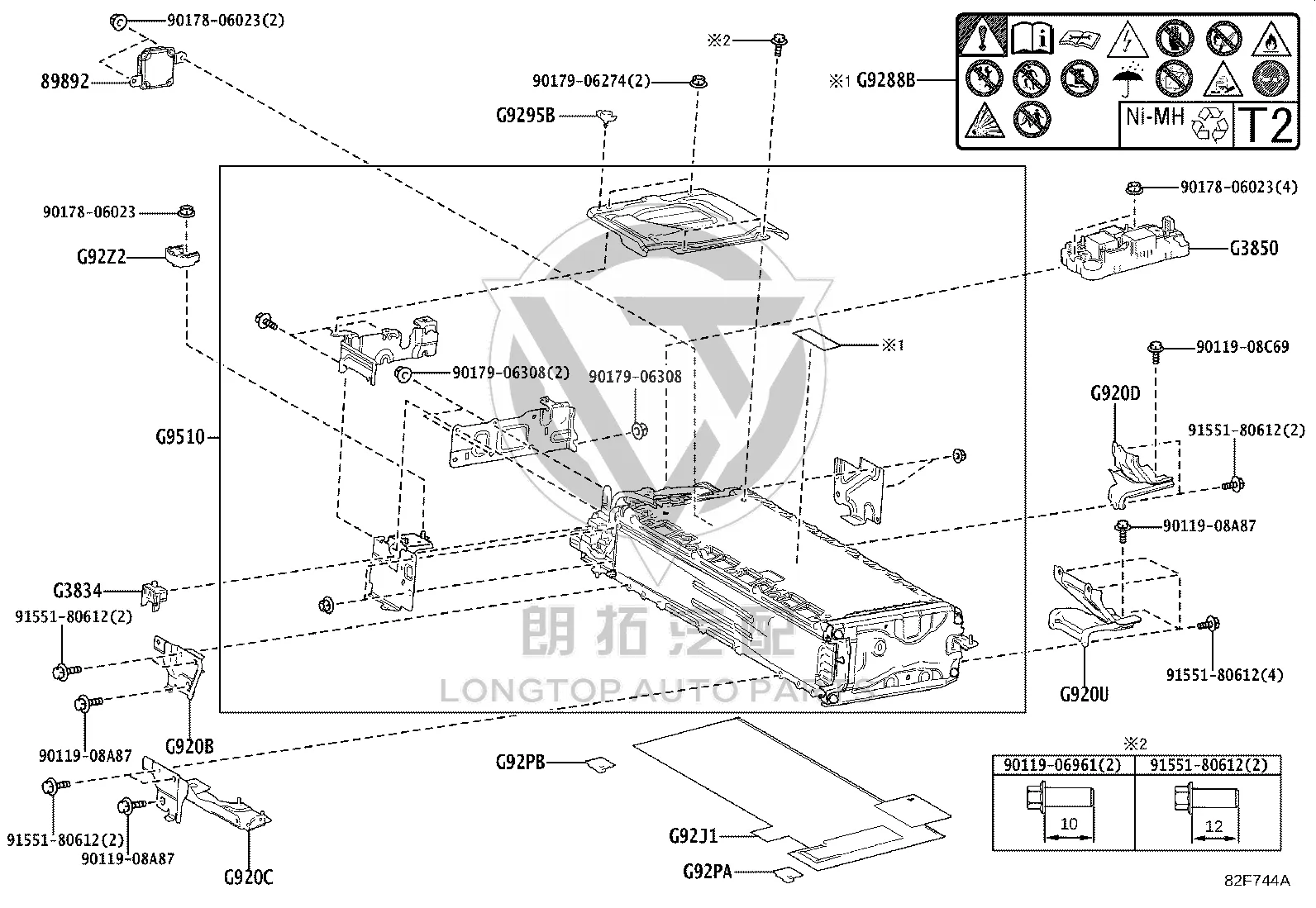
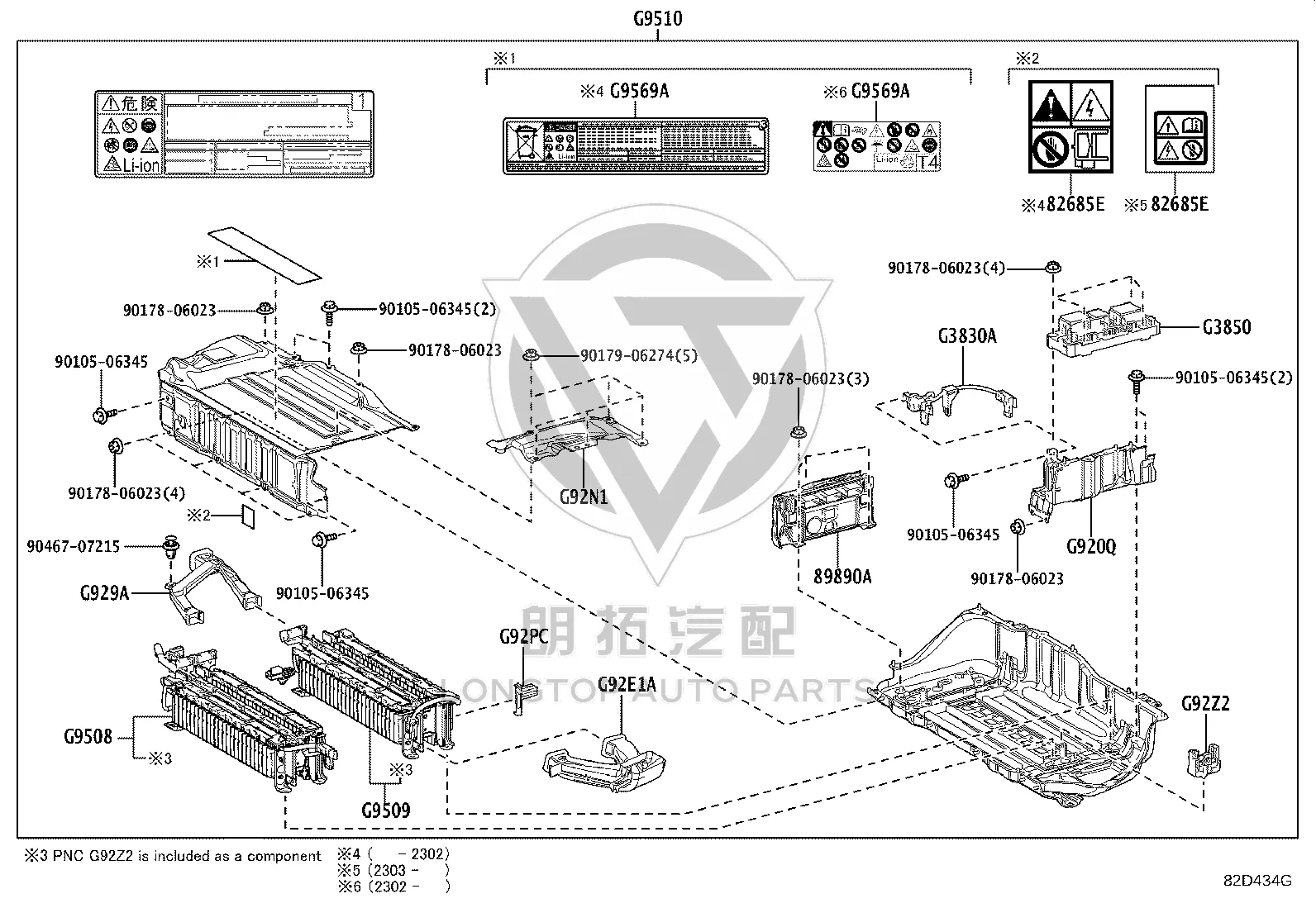
A hybrid battery service on the Sienna Hybrid (AXLH4#, 2021 onward) is modular work, which means a shop does not always have to replace the whole pack. The traction battery’s housing and No.1 device box is G3850-48010, the high-voltage terminal box is G92Z2-47070, and the pack’s air intake filter is G92DH-08020. All three fit the Sienna Hybrid of this generation, so a shop can rebuild the case and the electrical connections instead of replacing the entire pack blind. A housing or terminal box damaged by water is exactly the kind of component a buyer should have on hand, because it is the part that fails while the cells behind it may still be sound. The related hardware sits in the power battery category.
What these cases teach parts buyers
- Water ingress is a leading cause of early hybrid battery failure, and it is never covered by warranty or ordinary insurance.
- A hybrid that loses power and gains fuel consumption after flooding is a battery diagnosis, not an engine or gearbox one.
- The NiMH pack is modular. Genuine housing, terminal box and module parts let a shop repair the damage instead of replacing the whole pack.
- Used packs are a budget option with no warranty and unknown history; genuine new parts are the defensible recommendation.
- Confirm the chassis code, AXLH4# for the 2021 onward Sienna Hybrid, and check the OE number with the OE number guide before quoting battery hardware.
Need a genuine housing, terminal box, or cooling filter for a Toyota or Lexus hybrid battery? Send the OE number and chassis code on WhatsApp or through the contact page, and we will confirm fitment before you order.

The LongTopAuto team writes from 25+ years of genuine Toyota and Lexus OEM parts export experience in Guangzhou, China. Our guides come from daily OE number checks, packaging review, and export sourcing work.