

Four repair files from the Highlander and Camry platforms, written the way a parts counter sees them: what failed, how the shop found it, and which components you would order for the same job. The diagnosis data (fault codes, measured pressures, temperatures) is kept as recorded. The OE part numbers come from our catalog.
Case 1 — Highlander steering assist loss (2012, 110,000 km)
Symptom. A 2012 Highlander with the 1AR engine and 110,000 km on the clock came in with a steering complaint: the assist would drop out in traffic, the warning lamp lit, and the wheel turned heavy. Not a fault you drive around with.
Diagnosis. The steering control unit held two codes: C1521 (steering servo motor short circuit) and C1532 (steering control unit failure). Both cleared and both came back. Power supply and fuses tested fine. The torque sensor circuit was then measured through connector Z5: supply voltage, reference voltage, ground, and the main and sub torque sensor signals all read within specification while the fault was absent. When the fault appeared, the signal ground showed unexpected resistance to the body. The break was inside the steering control unit itself, not in the wiring.
Fix. A replacement power steering ECU, then a test drive. The fault did not return.
Parts notes. On this platform the EPS control unit sits behind the lower-left dashboard trim rather than in the column, which makes the chassis code the only reliable way to order the right unit. In our catalog:
- EPS control module — for example the steering column control module 8965030812
- Highlander steering rack — steering gear 4551048010 (listed for the GSU4 series)
- Full range: steering columns and steering gear assemblies
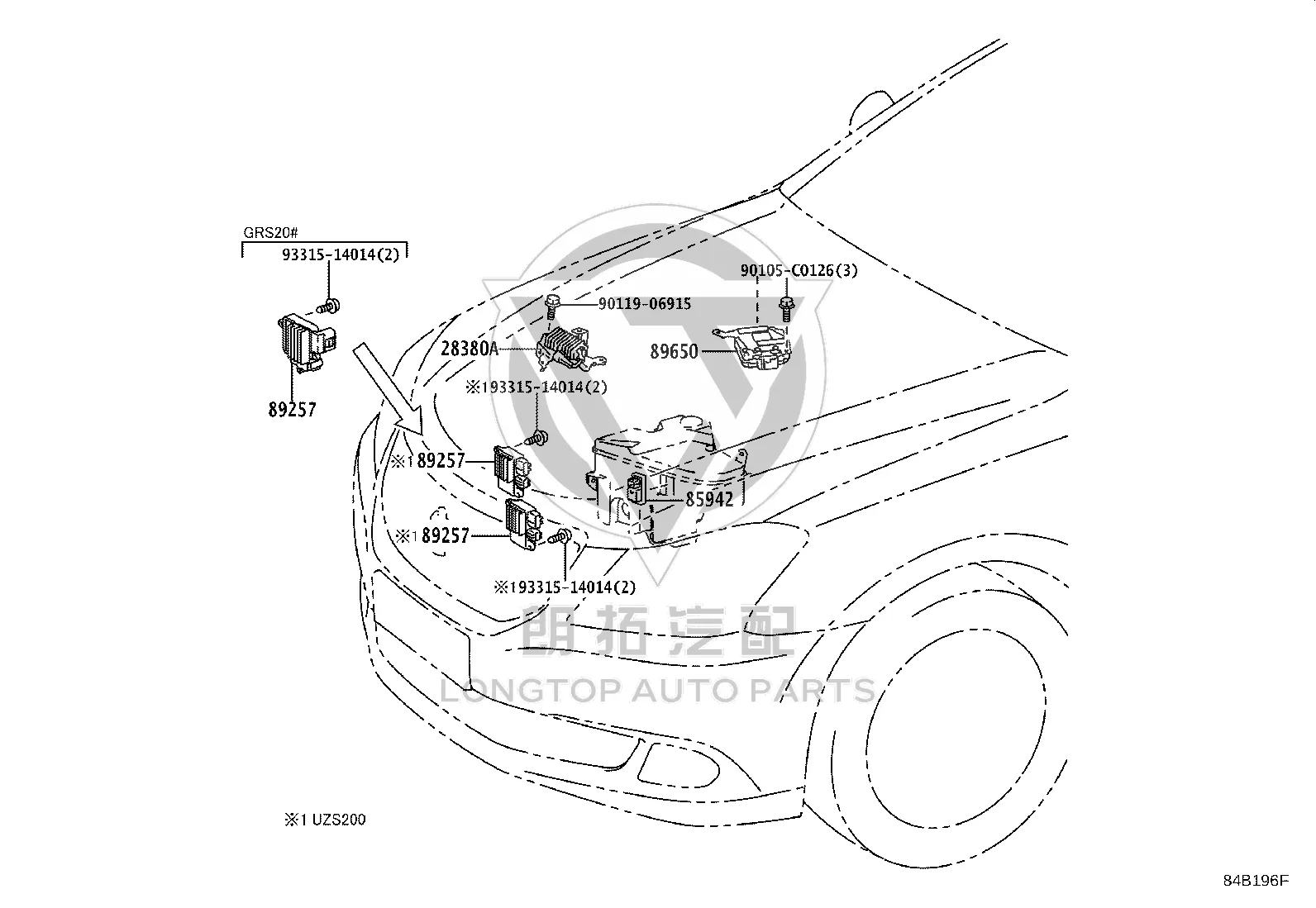
Buyers’ shorthand: “power steering failure” alone is not an order. The chassis code decides between a column module, a rack, or a torque sensor, and our OE number guide covers that check step by step.
Case 2 — Highlander A/C not cooling (2009, 250,000 km)
Symptom. A 2009 Highlander (2GR engine, 250,000 km) arrived with weak air conditioning that sometimes stopped cooling altogether.
Diagnosis. “A/C not cooling” turned out to be three faults in a row. The rear evaporator temperature sensor circuit was broken inside the harness, so the control unit read −29.7 °C and shut the compressor down; the harness damage traced back to an earlier accident repair. With the wiring fixed, the A/C failed again. The refrigerant flow control valve had no voltage, and the A/C amplifier showed a burned component on its circuit board. The amplifier was replaced, and cooling still underperformed: 0.942 A at the flow valve but only 1.05 MPa on the high side. Correct refrigerant charge plus maximum flow with low high-side pressure pointed to a worn compressor.
Fix. Amplifier first, then compressor and receiver drier. Evaporator temperature came back to 4 °C and the ticket closed.
Parts notes. One job, three component types:
- Evaporator — evaporator core 8850148311 (Highlander GSU4 series)
- A/C amplifier — for example the Land Cruiser 200 unit 8865060D71
- Compressor — see our air conditioning pump range
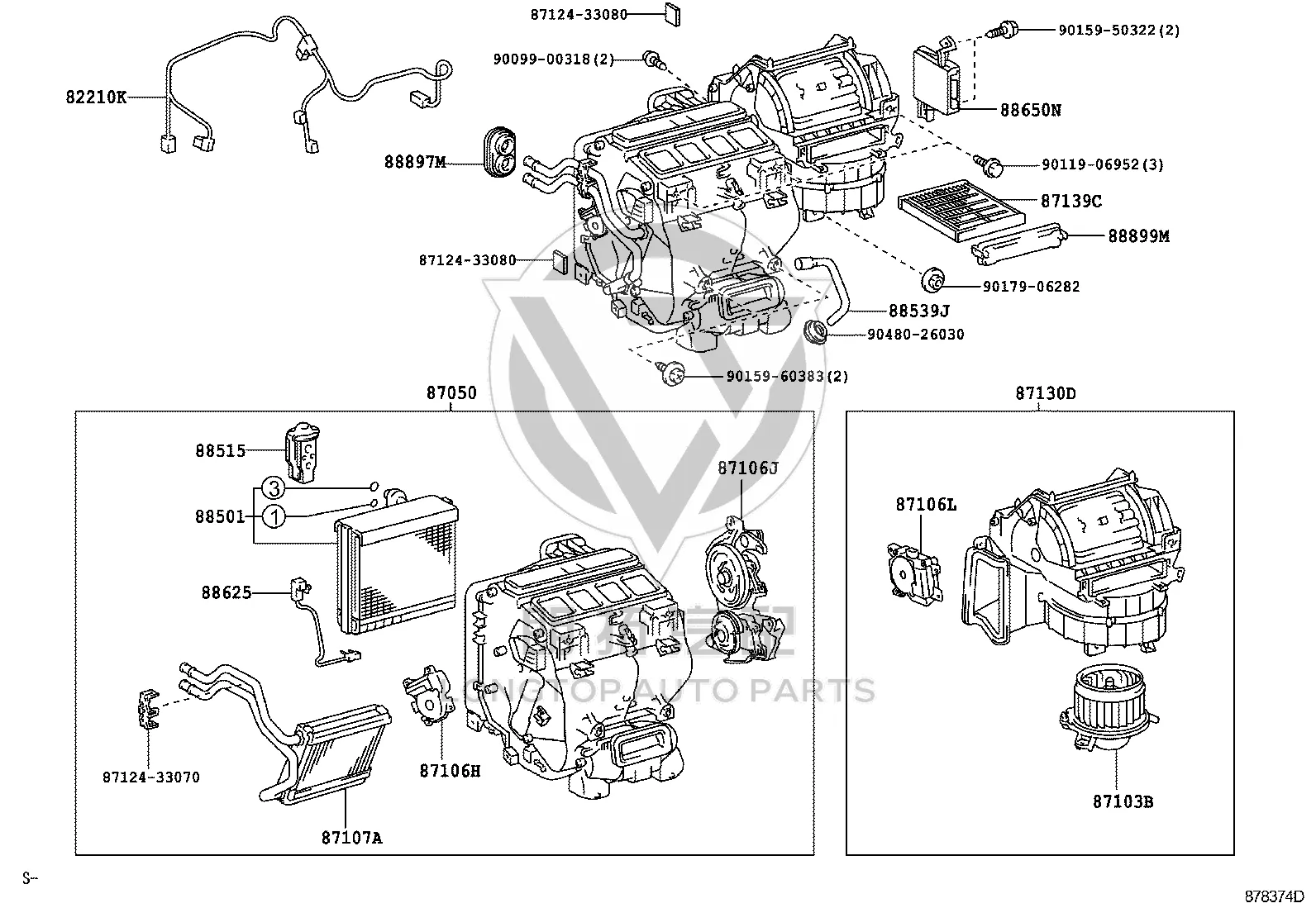
Take the pattern from this ticket: high-mileage A/C complaints arrive in chains, and the first repair rarely ends the visit.
Case 3 — Highlander rainy-day squeal and A/C shutdown (2012, 120,000 km)
Symptom. Same GSU45 platform, 120,000 km. In rain: a loud squeal, flickering A/C indicator, windshield fogging up.
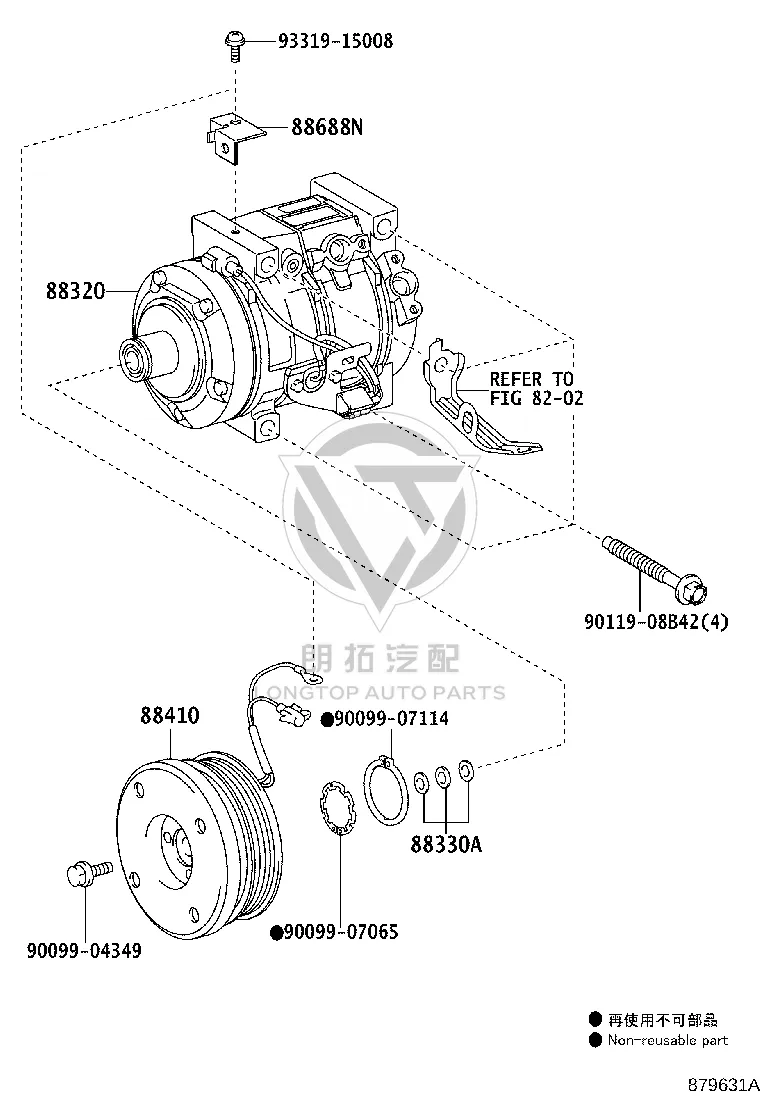
Diagnosis. The compressor carries a speed sensor, and the control unit cuts the compressor when it sees an abrupt speed change, to protect the system. Water sprayed on the compressor clutch reproduced the squeal and the shutdown immediately. The open question was the water path. Driving through 5 cm of standing water did not reproduce the fault, and the compressor sits 33 cm above the ground with the engine shield at 20 cm. The gap turned out to be between the front right fender liner and the body: wheel spray under pressure could reach the clutch through it. Sealing the gap ended the fault.
Fix. The fender liner was modified and sealed. No parts were replaced.
Parts notes. Left unrepaired, the casualty here would have been the A/C compressor clutch, for example the Toyota A/C pump 88320-6A290 in our catalog. Fender liner and under-shield condition belong on the A/C health checklist for any vehicle that runs in rain.
Case 4 — Camry rear rattle over bumps (2013, 130,000 km)
Symptom. A 2013 Camry (1AZ engine) with a metallic clank from the rear on rough roads.
Diagnosis. Chassis bolts were torqued and the suspension inspected: nothing. The shock absorbers came out and tested fine. The cause only showed after the left rear tire and brake disc were off: the parking brake shoe was touching its backing plate, and one shoe fixing spring had visibly shortened and lost tension. The loose shoe knocked against the plate on bumps.
Fix. A new parking brake shoe assembly. Noise gone.
Parts notes.
- Camry parking brake pad — rear right parking brake pad 4655033020 (ACV40 series)
- Rear drum brake shoe example — rear brake shoe 044950K120 (Fortuner)
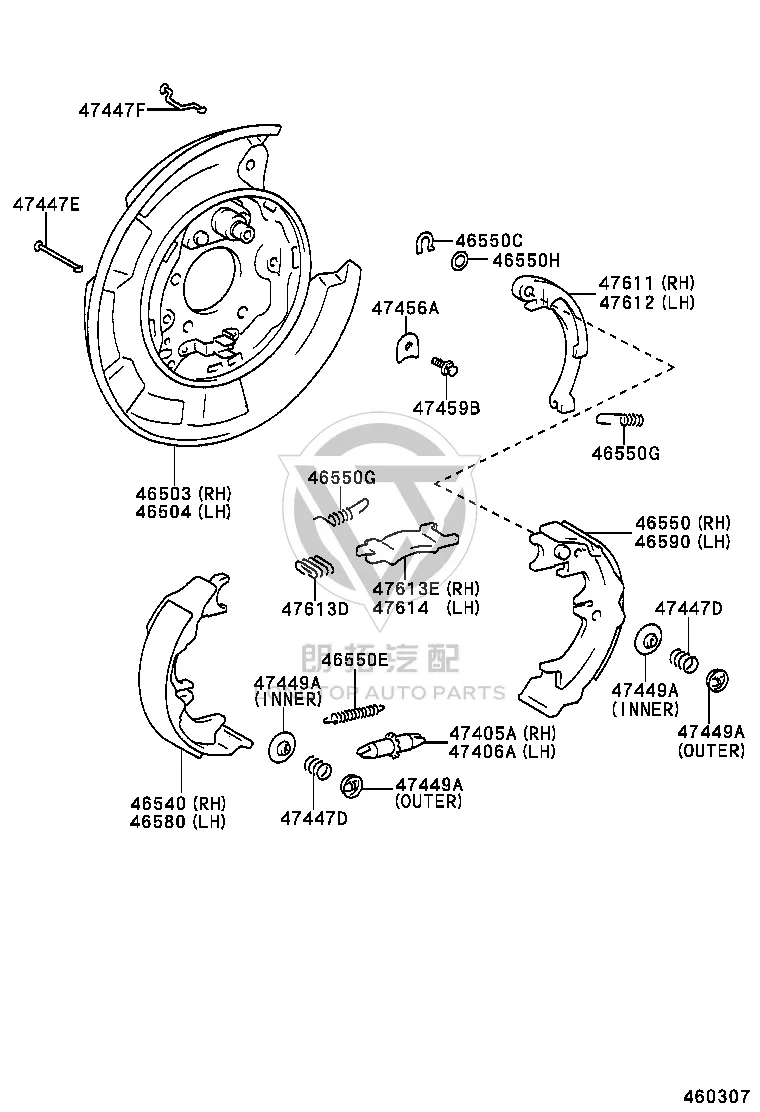
A rear clank that survives a suspension check usually lives inside the drum. Shoes, springs and backing plates are the parts to quote.
What the four files have in common
- Diagnosis sets the part list. In every case above the replaced component was not the one the symptom suggested.
- Chassis code beats model name. Highlander parts change by production year, and both the steering and A/C tickets were closed on precise identification, not on “Highlander A/C parts”.
- High-mileage systems fail in chains. The 250,000 km A/C job needed three components. A quote for one of them is an invitation for the car to come back.
- Verify before ordering. The same checks we run: how to identify genuine Toyota parts, and the OE number verification workflow.
If you need any of the parts above, or the wider steering, A/C and brake ranges for your market, send the OE numbers or chassis codes on WhatsApp or through our contact page. LongTopAuto matches genuine Toyota and Lexus parts by OE number, with fitment verified by chassis code and production year.

The LongTopAuto team writes from 25+ years of genuine Toyota and Lexus OEM parts export experience in Guangzhou, China. Our guides come from daily OE number checks, packaging review, and export sourcing work.